Research Articles
Electrocorticography (ECoG): The Semi-Invasive Bridge to High-Fidelity Brain-Computer Interfaces
This article provides a comprehensive analysis of Electrocorticography (ECoG) as a pivotal semi-invasive technology for brain-computer interfaces (BCIs), tailored for researchers and drug development professionals.
Decoding Neural Signals: A Comprehensive Guide to Kalman Filters and Bayesian Methods for Research and Drug Development
This article provides a thorough exploration of Kalman filters and Bayesian decoding methods for interpreting neural signals, tailored for researchers, scientists, and drug development professionals.
SSVEP and P300 Speller Protocols: A Comprehensive Review of Non-Invasive BCI Systems for Communication
This article provides a systematic review of Steady-State Visual Evoked Potential (SSVEP) and P300-based brain-computer interface (BCI) spellers, which enable communication for individuals with severe neuromuscular disorders.
Optimizing Neuromodulation: A Research-Focused Guide to Deep Brain Stimulation Parameters for Neurological Disorders
This article provides a comprehensive analysis of Deep Brain Stimulation (DBS) parameter selection and optimization for researchers, scientists, and drug development professionals.
Restoring Touch: Advances in Intracortical Microstimulation for Sensory Feedback in Next-Generation Prosthetics
This article comprehensively reviews the application of Intracortical Microstimulation (ICMS) for providing sensory feedback in neuroprosthetics, targeting researchers and scientists in biomedical fields.
Motor Imagery EEG Paradigms: Advancements in Non-Invasive Brain-Computer Interface Control for Clinical and Research Applications
This article provides a comprehensive analysis of motor imagery (MI) based Electroencephalography (EEG) paradigms for non-invasive Brain-Computer Interface (BCI) systems.
Navigating Acceptance and Risk: A Research-Focused Analysis of Invasive Brain-Computer Interfaces
This article provides a comprehensive analysis of user acceptance and risk factors for invasive Brain-Computer Interfaces (iBCIs), tailored for researchers, scientists, and drug development professionals.
Securing the Future of Neurotech: Strategies for Long-Term Stability and Biocompatibility in Neural Implants
This article provides a comprehensive analysis of the primary challenges and innovative solutions for achieving long-term stability and biocompatibility in implantable neural interfaces.
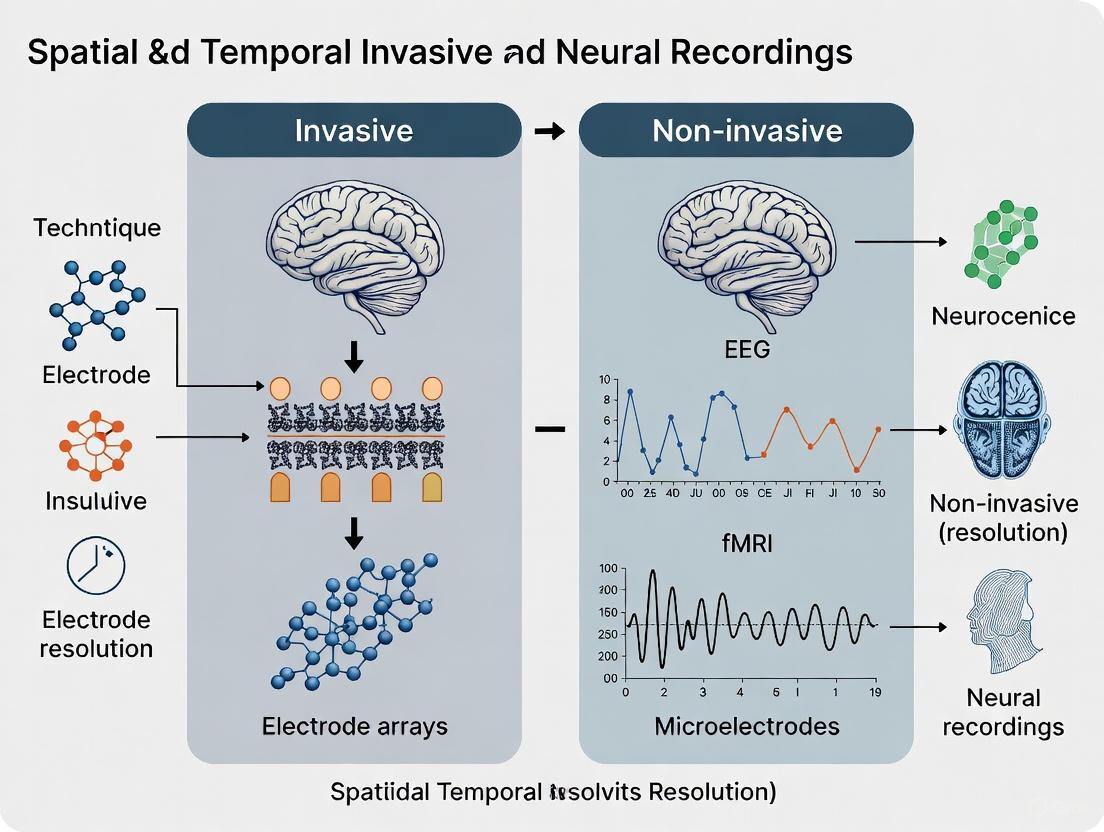
Invasive vs. Non-Invasive Neural Recordings: A Comprehensive Analysis of Spatial and Temporal Resolution for Biomedical Research
This article provides a detailed comparative analysis of the spatial and temporal resolution capabilities of invasive and non-invasive neural recording techniques, tailored for researchers, scientists, and drug development professionals.
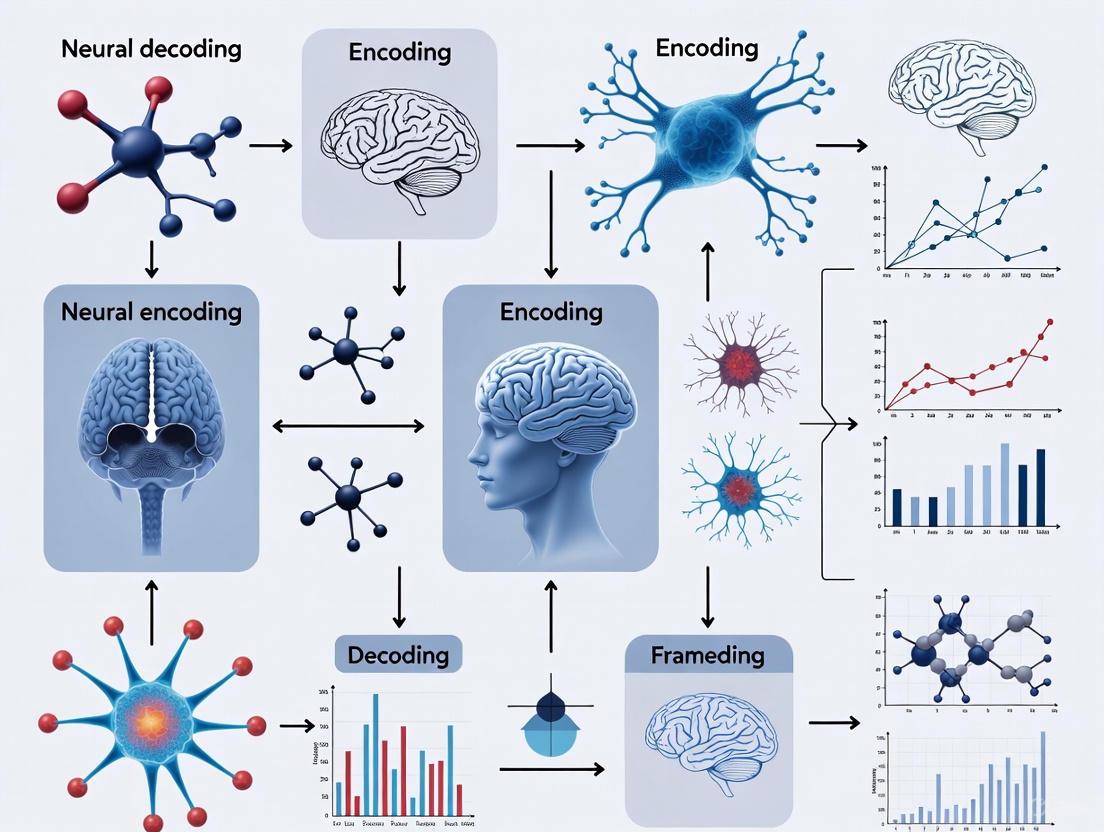
Neural Encoding and Decoding Frameworks: From BCI Foundations to Drug Discovery Applications
This article provides a comprehensive overview of modern neural encoding and decoding frameworks, exploring their foundational principles, methodological advances, and transformative applications.