Research Articles
iCanClean Algorithm for Mobile EEG: A Comprehensive Guide to Advanced Motion Artifact Removal
Mobile electroencephalography (EEG) enables unprecedented brain imaging during natural movement but is critically hindered by motion, muscle, and environmental artifacts that corrupt data quality.
Filtering Motion Artifacts with Canonical Correlation Analysis: A Comprehensive Guide for Biomedical Research
This article provides a comprehensive examination of Canonical Correlation Analysis (CCA) as a powerful multivariate method for filtering motion artifacts and enhancing signal quality in biomedical data.
ICA for EEG Artifact Removal: A Comprehensive Guide for Biomedical Researchers
Independent Component Analysis (ICA) has become a cornerstone technique for cleaning electroencephalography (EEG) data of confounding artifacts, which is a critical preprocessing step in both neuroscience research and clinical drug...
Volume Conduction in EEG: Mechanisms, Artifact Propagation, and Advanced Analysis for Biomedical Research
This article provides a comprehensive analysis of volume conduction, a fundamental principle governing how bioelectric currents from neural sources spread through the conductive tissues of the head, shaping the EEG...
Artifacts and Brain-Computer Interface Performance: A Comprehensive Analysis for Biomedical Research
This article provides a systematic examination of the multifaceted impact of artifacts on Brain-Computer Interface (BCI) performance, tailored for researchers and drug development professionals.
Navigating the Noise: Challenges and Advanced Solutions in High-Density EEG Artifact Removal
High-density electroencephalography (hd-EEG), with its vast spatial resolution, is indispensable for modern neuroscience research and clinical applications.
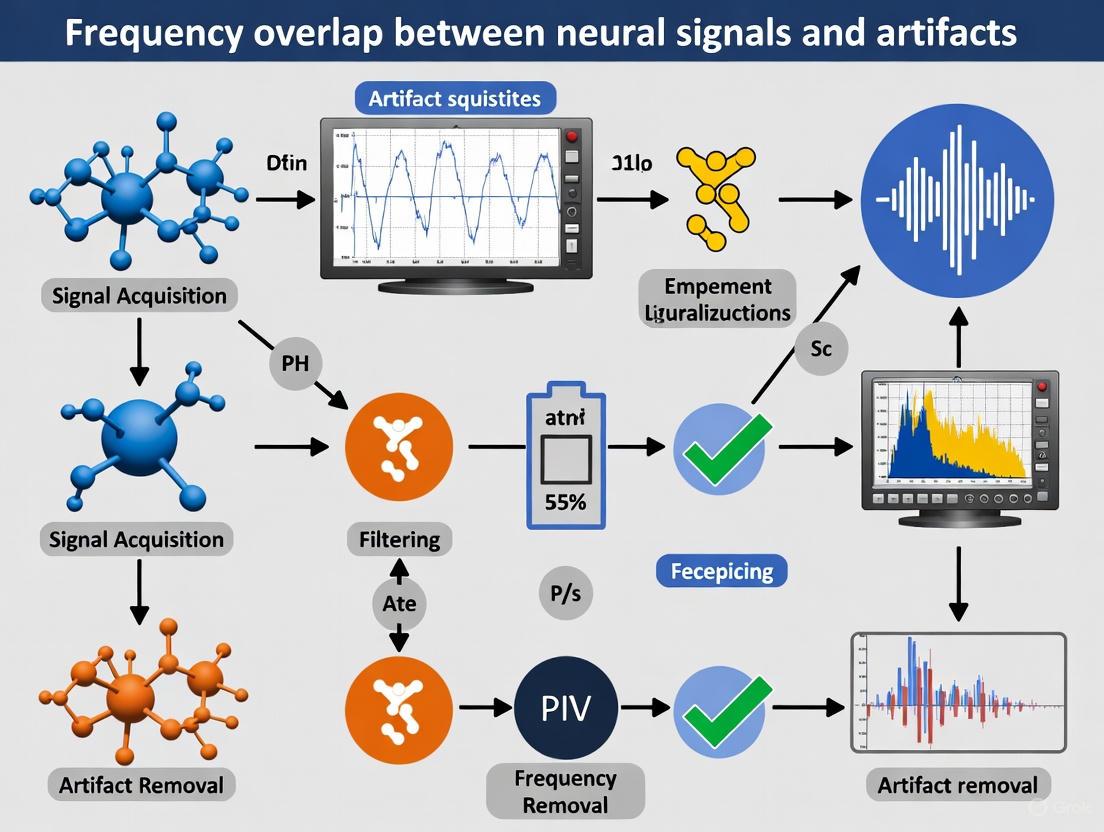
Untangling the Signal: Overcoming Frequency Overlap in Neural Data for Advanced Biomedical Research
This article addresses the critical challenge of frequency overlap between neural signals and biological artifacts, a fundamental problem that confounds data interpretation in neuroscience and drug development.
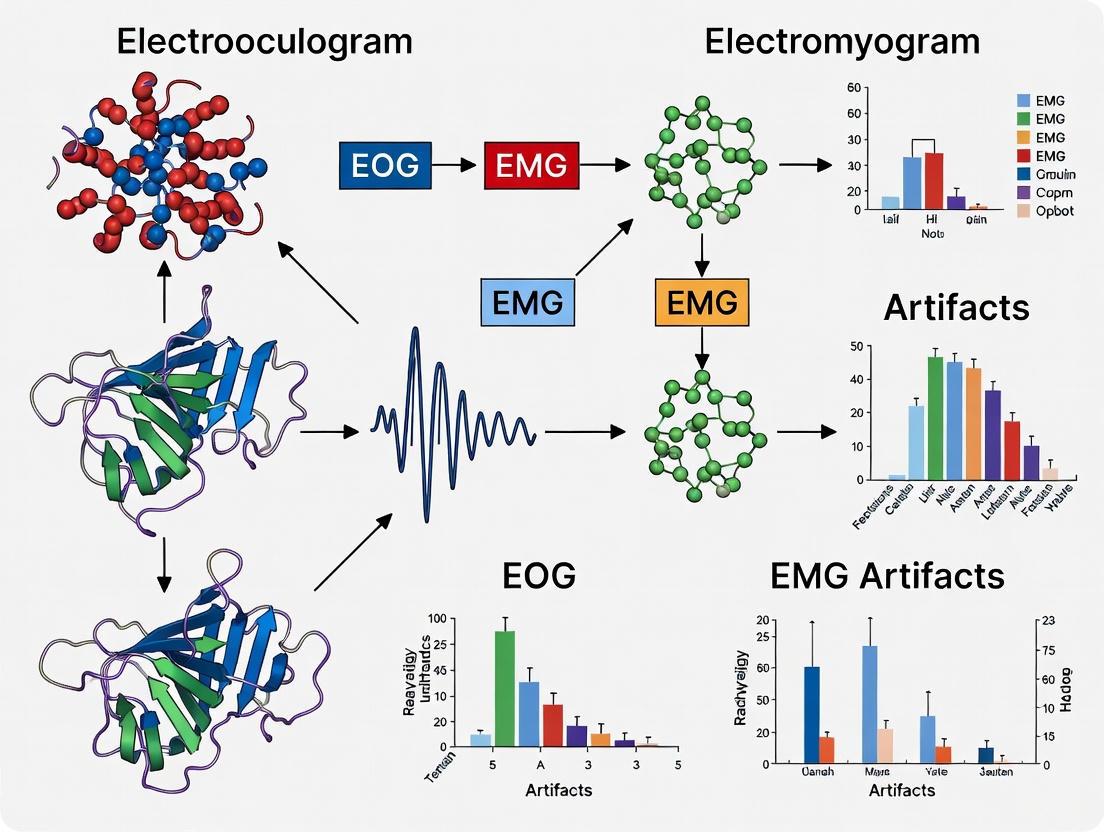
EOG vs EMG Artifacts in EEG: A Comprehensive Guide for Biomedical Research and Signal Processing
This article provides a comprehensive analysis of electrooculogram (EOG) and electromyogram (EMG) artifacts, two predominant physiological contaminants in electroencephalography (EEG) data.
BCG Artifact in Simultaneous EEG-fMRI: A Comprehensive Guide from Mechanisms to Advanced Removal Strategies
Simultaneous EEG-fMRI is a powerful multimodal neuroimaging technique that combines high temporal resolution with high spatial resolution.
Unmasking Motion: A Researcher's Guide to Sources and Solutions for Artifacts in Mobile EEG
Mobile electroencephalography (EEG) enables unprecedented brain monitoring in real-world settings, from clinical trials to athletic performance.